


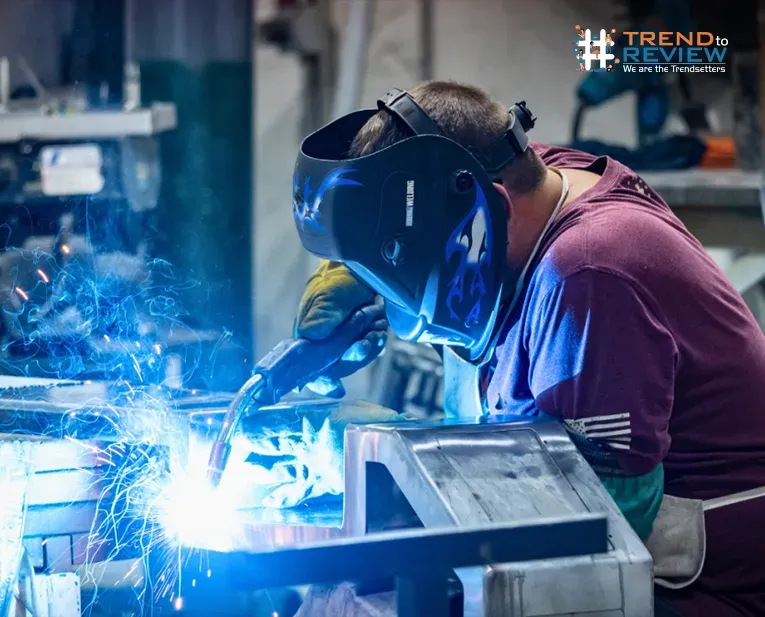
Labor and overhead form important parts of a fabrication workshop’s costs. Consumables are a rounding error by comparison, and that is exactly why they cause expensive problems. A workshop that treats a $2 contact tip as an afterthought ends up paying welder wages for the time spent finding one.
The real cost of micro-downtime
Micro-downtime is the term for short, unplanned stops: a welder leaves the bay to fetch a gas diffuser, or finds the bin empty and waits two days for a delivery. Most stops cost only a few minutes of paid labor. Across a full team and a working year, those minutes add up to thousands of dollars in lost production.
Because labor dominates the cost structure, the hours the arc is actually burning decide whether a job makes money. A missing contact tip stops the arc as effectively as a failed power source, but the power source gets a maintenance schedule and the contact tip gets forgotten.
An empty bin is worse than a long walk. A welder who finds no backup stock either stops or improvises, and improvised consumables such as the wrong tip size or a mismatched diffuser produce weld defects that surface later.
Downtime at this scale rarely gets recorded. Few workshops log a five-minute walk to the storeroom, so the losses don’t appear in any report and never get fixed. A general industrial supplier sells the part and moves on. A welding-focused supplier asks why the bin was empty, then sets up a system so it stays full.
Unreliable stock also changes behavior on the floor. When bins run empty often enough, welders build private stashes in toolboxes and lockers, and the official stock count stops reflecting what the workshop actually holds. Once replenishment becomes dependable, the stashes drift back into the cabinet.
Consumable storage belongs in the quality system
Low-hydrogen electrodes and flux-cored wires absorb moisture from the air once their packaging is opened. That moisture introduces hydrogen into the weld pool, and hydrogen causes porosity and delayed cracking in the finished weld. The cracks can appear hours or days after the welder has moved on to the next job.
A good supplier treats storage as part of weld quality. Heated rod ovens hold low-hydrogen stick electrodes at the manufacturer’s recommended temperature. Sealed containers and a controlled storeroom protect spooled wires and opened packs, and rotation makes sure older material gets used before newer stock.
Wire left on the feeder overnight is a common failure point. In a humid workshop, an exposed spool picks up moisture and surface rust within days, so many shops remove spools or fit covers when machines sit idle. A specialist will flag this during a site visit; a catalog supplier doesn’t have a reason to ask.
Filler metals arrive with storage instructions printed on the packaging, and those instructions assume someone reads them. The supplier builds them into the storage plan and labels the cabinet to match.
Different consumables need heated ovens, sealed containers, controlled rooms or simple dry shelving, and getting it wrong costs rework hours on a job that was already budgeted.
Putting 5S to work in the welding bay
5S is a lean workplace method – Sort, Set in order, Shine, Standardize, Sustain – and it maps directly onto a consumables cabinet. Most specialist suppliers will help set it up, because an organized bay makes their replenishment job easier too.
Sort comes first. Most welding cabinets hold tips and nozzles for torches the shop doesn’t own anymore, and clearing out that dead stock reveals what is actually being used.
Set in order means point-of-use storage. High-turnover items live at the welding bay in color-coded bins marked by torch model, close to the welder who uses them. Shadow boards give each torch and accessory one fixed place, so a missing item is visible at a glance.
Shine doubles as inspection. Cleaning the cabinet exposes worn liners and damaged nozzles before they fail in the middle of a weld.
Standardize turns the layout into a rule: every bin carries a label with a part number and a minimum quantity. Labels carry the supplier’s part number alongside the workshop’s own code, so either side can reorder without translation. Gas delivery accessories such as regulators, flowmeters, hoses and flashback arrestors get the same treatment, with inspection dates recorded so safety checks stop depending on memory.
Sustain is the step most shops skip, but a five-minute weekly audit keeps the system alive, and scheduled supplier visits can carry part of that load.
Vendor-managed inventory shifts the counting to the supplier
Vendor-managed inventory, or VMI, hands the stock-take to the supplier. The supplier agrees a stock list with the workshop, sets minimum and maximum levels for each item, visits on a fixed schedule and replenishes what has been used. The workshop manager stops writing purchase orders for contact tips.
The arrangement works because the supplier sees patterns a single workshop cannot. Usage across many fabricators shows which items spike seasonally and which are drifting toward obsolescence, and the stock list gets adjusted on measured usage. Repeatable orders replace one-off scrambles.
The administrative saving is real, but the bigger gain is that stock levels get set by someone who tracks consumption rates across industrial fabrication every week. Availability conversations change as well: the question becomes how much buffer stock the workshop should hold against the supplier’s lead time.
The two-bin Kanban trigger
The simplest version of VMI is a physical two-bin Kanban system. Each high-turnover item gets two bins. Welders draw from the front bin, and when it empties, the empty bin itself is the reorder signal sent back to the supplier. The second bin covers usage while the first gets refilled, so the bay never runs dry and the cabinet never overflows.
Regional supply and the value of a local partner
VMI depends on site visits, so distance decides how well it works. A supplier based interstate can’t check bins weekly, and stock held in a distant warehouse adds days to every replenishment. Local stock and regular visits are what make the system routine.
Fabricators in Western Australia can search for “welding shops perth” as a starting point when comparing regional supply options. The next step is to ask actual suppliers directly what replenishment arrangements they offer, including whether VMI programs, local stockholding and scheduled site visits are available.
Freight is the quieter advantage. Wire drums and electrode cartons are heavy, and long freight legs add cost and transit damage to every order. Ask whether the supplier will walk the workshop and put the bin counts in writing.
Standardizing torches to shrink the consumables list
Every torch model carries its own family of consumables: contact tips, gas diffusers, nozzles, liners, collets and tungsten electrodes on the TIG side. A workshop running several MIG gun and TIG torch models can hold dozens of near-duplicate parts, and each one needs its own bin and reorder level.
A specialist audit counts the fleet and looks for overlap. Many guns can be consolidated onto one or two platforms, and cutting torch variety can reduce the number of unique consumable SKUs. The cabinet gets smaller, the bins get simpler, and stockouts on oddball parts stop happening.
The audit also catches brand duplication. Torches from different makers often accept the same consumables, and someone familiar with the range knows which parts cross over, so two apparent product lines can collapse into one. Larger volumes of fewer part numbers are easier for a supplier to keep on the shelf, and that improves availability at the bin.
Abrasives need rotation and the right rack
Grinding discs, cutting wheels, flap discs and wire brushes are consumables too, and they degrade on the shelf. Resin-bonded wheels absorb moisture, and discs stored flat under a pile of other stock can warp or crack. A compromised wheel running at high speed is a serious safety hazard.
Proper storage is basic: dry conditions, each wheel type supported the way its maker’s storage instructions specify, and strict first-in, first-out rotation so the oldest stock gets used first. Discs tossed loose into a bin chip at the edges, and chipped edges are where failures start, so racks with dividers keep each disc separated. Many resin-bonded wheels carry a manufacturer use-by date, and a supplier managing the cabinet flags slow-moving lines before they age past it.
Abrasives also account for a large share of consumable spend in a fabrication workshop. Dead stock on this shelf ties up money, and expired stock creates a safety risk.
Traceability starts at the rack
Structural welding requires proof that the consumables met the specified standard. Batch numbers, heat numbers, mill certificates and material test reports provide that proof, and the paperwork is only useful while it stays connected to the physical stock.
Organized storage keeps the connection automatic. Batches stay separated in labeled bins, certificates are filed against lot numbers, and an auditor asking which wire went into a given job gets an answer in minutes. When batches get mixed in an open drawer, traceability is gone and the certificates lose their value.
The discipline runs the other way as well. If a batch is recalled or a certificate is queried, separated storage shows exactly which jobs are affected. For shops quoting on structural work, clean traceability shortens audits and protects their eligibility to bid.
The starting point costs nothing: open the consumables cabinet and count the part numbers. If the list runs into the dozens, or if any bin is empty, the workshop has a supply problem that shelving alone can’t fix. A specialist supplier’s audit turns that count into a stock list, a storage plan, reorder levels and a replenishment routine, and the empty bins stop costing welder time.
