


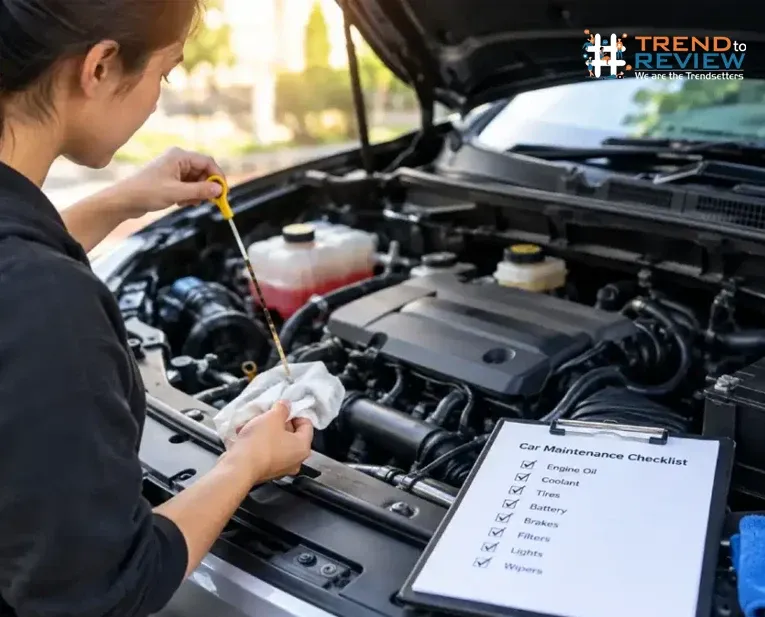
A scheduled service handles work that needs tools, measurements and workshop access. The habits between visits serve a different purpose: noticing changes, keeping basic items in order and passing useful information to the technician. They do not require turning the driveway into a repair bay.
The most useful routine is one the owner can follow safely and consistently. That means using the vehicle’s instructions rather than a universal checklist, recognizing when an observation calls for help and keeping records instead of relying on memory. These common mistakes are a good place to start.
1. Leaving every check until the next service
It is easy to think that a car recently serviced needs no attention until the next reminder. A service records its condition and completes specified work at that visit. It cannot prevent a puncture, leak or electrical fault from developing later.
Use the owner’s manual to identify checks intended for the driver. These may include tires, visible fluid levels, lights and wipers. The method and frequency depend on the vehicle and its use. A familiar routine makes a change easier to spot without requiring the owner to diagnose it.
Notice what happens during ordinary driving as well. A new vibration, changed starting behavior or unusual smell deserves a note. Do not deliberately repeat a concerning maneuver to reproduce the symptom. Observations from normal use are enough to begin a conversation with the workshop.
A routine check is not a substitute for the maintenance schedule. Keep the next due date and distance visible, including any separate follow-up work noted on the last invoice.
2. Following a generic oil-checking routine
Not every car uses the same method for checking oil. Some have a dipstick, some use an electronic display, and temperature or waiting requirements can differ. An internet instruction to check every engine cold or immediately after driving may not fit the vehicle.
Follow the procedure in the owner’s manual on suitable level ground. Keep clear of hot components and moving parts. If access is difficult or the instructions are unclear, ask the workshop to demonstrate the owner check rather than improvising.
If a top-up is needed and the manual allows it, use oil meeting the required specification as well as the viscosity grade. Similar packaging or a familiar brand name does not establish suitability. Avoid overfilling and do not use additives as a substitute for investigating a problem.
Record repeated drops in level. The useful information is how much was added, when and at what odometer reading. Repeatedly topping up without reporting the pattern can hide a concern from the next technician. Oil color alone also cannot establish whether the oil remains suitable for continued use.
3. Borrowing a tire-pressure number from someone else
A pressure that suits another car may not suit this one. The correct setting can depend on the vehicle, tire arrangement and load. The maximum pressure printed on a tire’s sidewall is not the routine inflation instruction for the car.
Use the vehicle placard and manual, checking pressures under the conditions they specify. Where cold pressures are required, plan the check before a journey rather than adjusting hot tires to a cold target. Use a reliable gauge; a tire can look reasonably inflated while being below its specified pressure.
A tire-pressure monitoring system is useful, but it does not remove the need for the checks described in the manual. Respond to its alerts and investigate recurring loss rather than simply resetting the display.
Look for visible cuts, bulges, embedded objects or uneven wear without putting any part of the body under the car. Do not pull out a nail or screw to see whether it leaks. A damaged tire or rapid loss calls for appropriate assistance, not a promise to mention it at the next service.
4. Treating a dashboard warning as a reset problem
Clearing a warning does not fix its cause. Disconnecting a battery or using a scan tool just to make a light disappear can also remove information useful to the technician. A warning that goes out by itself may still be worth reporting.
Read the vehicle’s explanation of the indicator and any immediate response. Do not rely only on color: the symbol, message and symptoms matter. A service reminder and a fault warning are not the same thing.
For an oil pressure warning, overheating, smoke or impaired braking, pull over safely and seek assistance. Do not restart merely to test whether a serious warning clears. If the car is unsafe to drive, getting it to a workshop should not involve driving it there.
For other concerns, record the message and circumstances and arrange assessment as appropriate. If safe, take a photograph while parked. Avoid filming the dashboard while driving. A clear description is more useful than an erased warning and a guess at what it meant.
5. Topping up a fluid without asking why it is low
A correct level does not establish that the system is healthy. Repeated coolant loss, for example, needs investigation even if adding fluid temporarily restores the reservoir level. Brake fluid also deserves care: a low reading can reflect wear or a leak, so casual topping up can obscure useful information.
Only perform checks and top-ups the owner’s manual permits. Use the specified fluid, not a product chosen solely because its color looks similar. Never open a hot cooling system. If a level is unexpectedly low or a warning is present, ask for advice before driving or adding anything.
Washer fluid is simpler, but it still needs an appropriate product and correct reservoir. Mixing up filler points can turn a small task into an expensive repair. If the cap markings are unclear, stop and ask rather than assume.
A top-up also does not replace a scheduled fluid change. Quantity and condition are separate questions. Let the workshop know what was added so it has the history when assessing the system.
6. Keeping a mental record instead of a written one
It is surprisingly easy to forget whether a tire was inflated last week or last month, or how much oil was added before a trip. A short dated note is more useful than trying to reconstruct the story at the service counter.
Record the date, odometer reading and action taken. Keep invoices for tires, batteries, repairs and additional maintenance alongside scheduled service records. A photograph or digital folder can provide a backup, provided the details remain readable.
When a change needs professional attention, those notes help explain it. Searching for a car service near me is only the first step; tell the workshop whether the request is for routine maintenance, a new symptom or both. That distinction helps it allocate the appropriate appointment.
Ask how outstanding recommendations should be followed up. Do not assume everything on an advisory list can wait until the next routine visit. Safety concerns and recurring faults need their own plan.
Between-service care works best when its limits are clear. Follow the handbook, make safe observations and keep useful records. Leave diagnosis and repairs beyond the owner’s permitted checks to appropriately equipped help. Those habits support scheduled servicing without pretending that regular attention can prevent every fault.
7. Trying to solve every battery concern with a longer drive
Repeated short journeys can place demands on a battery, but slow cranking has more than one possible cause. Battery condition, charging performance and electrical connections may all need consideration. A longer drive is not a reliable diagnosis or a guaranteed remedy.
Notice changes from the car’s normal starting behavior and report them. For a vehicle used infrequently, ask about manufacturer-approved storage or charging guidance. The right equipment and procedure depend on the battery type and vehicle electronics.
Do not disconnect terminals, connect an unfamiliar charger or attempt a jump-start without understanding the vehicle’s instructions. Incorrect connections or unsuitable equipment can create hazards and damage components. Roadside assistance or a workshop can help when the safe procedure is uncertain.
Likewise, a charging-system warning does not necessarily mean replacing the battery will fix the problem. Report the warning itself rather than arriving with a part already selected.
8. Letting poor visibility become normal
Wipers often deteriorate gradually, making streaks easy to accept until heavy rain arrives. A smeared windshield or weak washer spray should not be left for the next scheduled visit simply because the car still drives normally.
Check lights, washer operation and wiper condition using the owner’s instructions. Clean the glass with a suitable product and replace worn blades appropriately. If a problem persists, have it assessed rather than repeatedly running damaged blades across dry glass.
Do not assume that adding a brighter replacement bulb is automatically suitable. Lighting specifications and access arrangements vary. Some components need workshop attention, and an incorrect part can create problems for the driver and other road users.
These checks are also useful before a long trip, but they are not a complete safety inspection. A quick walk around cannot establish the condition of brakes, steering or components hidden underneath the vehicle.
9. Buying parts from an online diagnosis
A forum can suggest questions, but it cannot inspect the car or test its wiring. A symptom shared by another owner does not prove that both cars have the same fault. Even a stored fault code generally directs investigation rather than naming a guaranteed replacement part.
Avoid buying a sensor, battery or other component before the cause is established. The wrong purchase can waste money and complicate a later investigation. Ask what testing supports the proposed repair and whether related causes have been considered.
Price is not a reliable quality test either. A lower-cost part is not automatically unsuitable, and an expensive box does not establish compatibility. The important questions are specification, fit, intended use and the supplier’s support.
Owner observations have real value when kept separate from diagnosis. Describe what changed, when it happens and what maintenance has been performed. Let the repair recommendation follow the evidence.
