


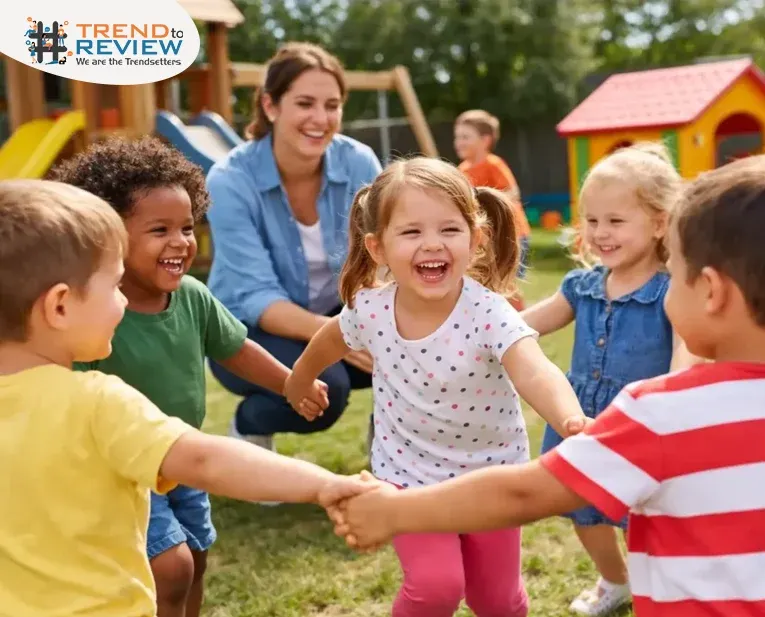
Kids pick up teamwork, confidence and friendship skills through active play, usually without noticing they’re learning anything. When children run, climb and race together, they end up waiting for turns, sharing space and handling mistakes in front of other kids, and those small moments add up over time. Knowing what each part of play builds helps parents and teachers choose activities worth encouraging.
How Group Games Build Teamwork
Relay races, tag and obstacle courses all come with a shared goal and a few rules, so children have to agree on who goes first, how to split up a task and what to do when someone gets it wrong. Nobody needs to explain cooperation to them because the game stops working without it. Younger kids learn it through trial and error, while older ones begin assigning roles and planning together before the game even starts. Giving each child a clear job, such as holding the finish line or counting laps, helps quieter kids join in without feeling put on the spot.
Settings That Encourage Active Play
Backyards and playgrounds work well on sunny days, and indoor spaces keep play going in any season. At the Do The Beach adventure park, an indoor space with obstacle courses and challenges, kids can try new things and cheer each other on, the same mix of effort and encouragement that makes group play worthwhile. Whatever the location, look for open floor space, equipment pitched at different ability levels and enough room for groups to play together at the same time instead of waiting in a single line.
Confidence Grows From Trying Hard Things
Kids who climb a taller wall or cross a wobbly bridge are testing limits and overcoming fears in a setting where the risks are small, and each success makes the next attempt feel more doable. That willingness to try often carries over to new situations away from the playground. Adults nearby influence how this goes, and a few habits make a difference:
- Let children pick which challenge to try first.
- Praise effort and repeated attempts instead of only the finish.
- Stay close enough to step in for safety but leave the problem-solving to them.
Friendships Form Around Shared Fun
Friendship between children who barely know each other often depends on whether they can sustain a shared activity, which is why a game with a clear goal gives them an easy way to get started. Active play supplies that goal naturally, whether it’s a race, a fort-building mission or a game of tag, and children who’ve worked through a challenge together usually have plenty to talk about afterward. Inviting another child to join a game gives both kids something to do together while they get acquainted.
Regular chances to move, climb and play alongside other children keep these skills in practice, since each one improves a little every time it gets used. Building active play into each week, in whatever mix of yard, park and indoor space suits the family, is an easy place to start.
